Driverless buses: when they will reach our roads
Driverless shuttles already carry passengers in closed zones. What keeps them off city streets is not the technology itself but rules and weather.
For you: A driverless city bus is at least ten years away, but you may ride a driverless airport shuttle much sooner.
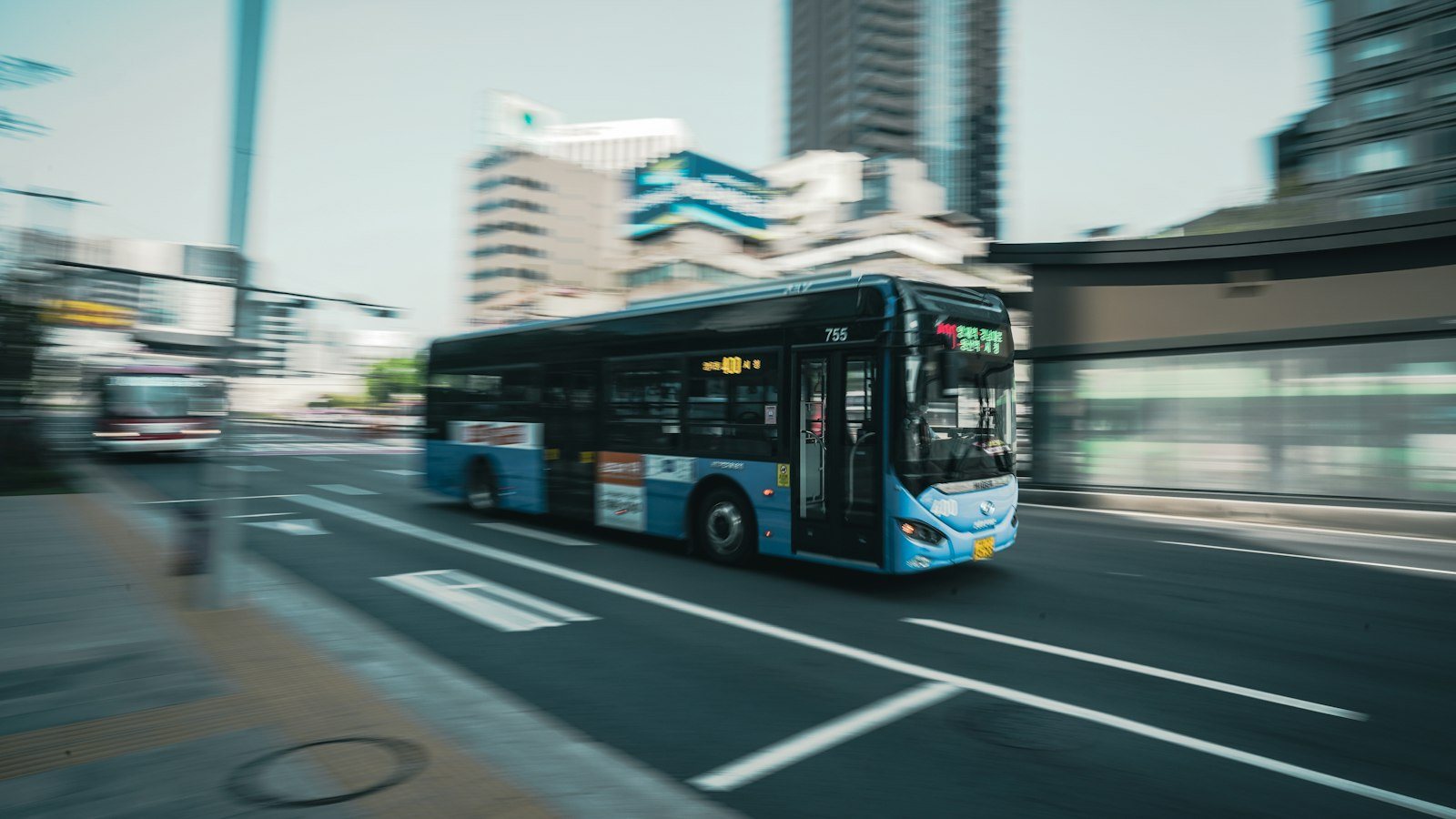
News about self-driving vehicles comes out often, so it can feel as if they are about to appear on our streets. The reality is more complicated. The technology already carries passengers, but only under special conditions.
This piece looks at where driverless shuttles run today, what cities still lack, and when Kazakhstan can expect them.
Where shuttles already run
Driverless shuttles already run on campuses and at airports in several countries. These places have a few things in common:
- routes are short and known in advance;
- speeds are low;
- pedestrians behave predictably.
In that kind of setting, decisions are easy for the vehicle. It knows every turn and every stop. Few people dash into the road. And if something goes wrong at low speed, the consequences are milder.
How does a driverless vehicle “see”? It usually combines several sensors. Cameras read signs and traffic lights. Radar measures how far away objects are and how fast they move. Lidar uses lasers to build a three-dimensional picture of the surroundings. Software merges this data and decides where to go.
What city streets are missing
A city is a different world. Routes are long, traffic is dense, and people and cars behave unpredictably. According to experts, city streets need three things.
- A law on liability. Who is responsible in a crash: the manufacturer, the operator or the company that wrote the software? Without a clear answer, nobody wants to take the risk.
- Precise maps. The vehicle has to know every lane, sign and kerb down to the centimetre. Yet a city keeps changing: roadworks, new signs, temporary detours.
- Sensors that can see through a blizzard. Snow covers cameras and hides road markings. A blizzard interferes with lidar as well.
Weather is our biggest test
That last point matters most for Kazakhstan. In much of the country winter is long and harsh. Blizzards, black ice and snow-covered roads are hard even for an experienced driver, and harder still for a machine.
A system tested in a warm climate may behave differently in our winter. So a driverless vehicle cannot simply be imported and put straight on the street. It would need long testing in local conditions.
Benefits and risks
It also helps to know why driverless transport is wanted at all. The possible benefits:
- vehicles can run on a steady timetable at night and at weekends;
- a machine does not get tired or check its phone;
- routes do not close because there are not enough drivers.
The risks:
- a software bug or a sensor failure;
- the threat of cyberattacks;
- the effect on people who drive for a living;
- passenger trust: many people are not yet ready to ride with nobody at the wheel.
That is why society adopts this technology step by step rather than all at once.
Dedicated routes come first
Experts expect dedicated routes to come first — from an airport to a terminal, for example. Conditions there resemble a campus: a short trip, low speed, few other vehicles.
A regular city bus without a driver is at least ten years away. Several scenarios are possible in that time:
- Cautious. Shuttles run only in closed zones such as airports, campuses and exhibition grounds.
- Middle path. A city opens a few routes with their own lane, while an operator still rides on board.
- Bold. Laws and maps are ready, and driverless buses gradually move onto ordinary routes.
Which scenario comes true depends less on the technology than on rules and testing.
What this means for you and what to do now
For the next few years your city bus will have a driver. But change will start elsewhere, and you can plan for it now.
- If you are a student: look at where demand is heading. Mapping, sensor data, transport safety and law will all need specialists.
- If you are a journalist: check stories that claim “driverless buses are here”. What zone does the vehicle run in, at what speed, and is there an operator nearby?
- If you run a business: look at closed sites. The technology takes hold first on simple, enclosed routes.
- If you are a passenger: if you meet a driverless shuttle at an airport abroad, watch how it works. It is the easiest way to see the future for yourself.
To dig deeper, try asking a chatbot this:
How does a driverless bus cope with a heavy blizzard? Explain in plain words how snow affects cameras, radar and lidar.Check any facts in the answer against reliable sources.



Comments
Sign in to leave a commentNo comments yet. Be the first.